League Operations
Youth Lacrosse Doesn’t Break on the Goal. It Breaks on the Shared Turf.
The game is four quarters. The hard part is the permit window, the crease on a soccer field, and the parent still walking toward last week’s turf.
· Coaches Pick · 8 min read
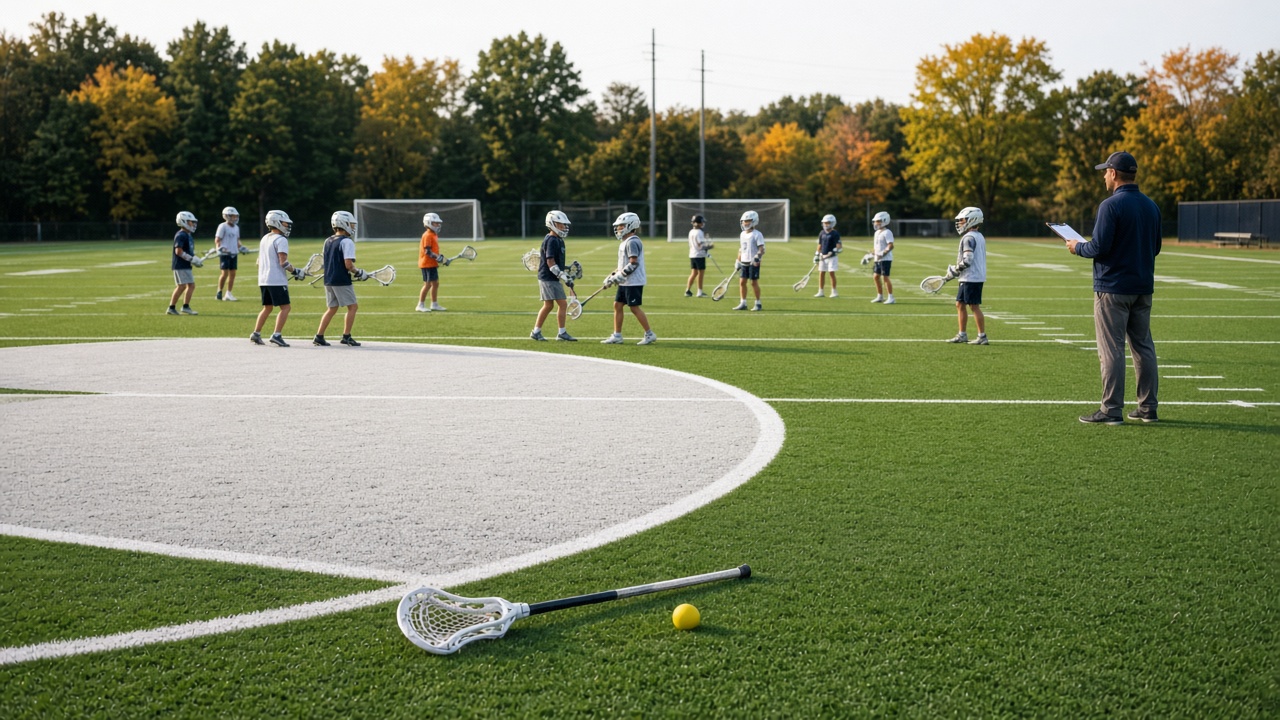
If you run a youth lacrosse league, September is not the championship. It is fall ball on a turf rectangle that also hosts soccer at 9:00 and flag football at 11:00. The crease is portable. The permit is not.
Soccer loses Saturday on a field flip. Baseball loses a weeknight on a wet diamond. Lacrosse loses the slot when the soccer goals stay up, the flag cones take the east end, and a parent is still walking toward last week’s turf. The sport is different. The operations problem is the same: one official schedule, or three unofficial ones.
Fall lacrosse is also a first-time sport for a lot of households. Kids show up with a new stick and a borrowed helmet. Parents do not already know that “Field B” is the far rectangle behind the rec center, that U10 uses a short field, or that girls and boys may not share the same crease markings. If those facts live in a coach’s camera roll, the league spends its goodwill before the first draw.
Why do youth lacrosse leagues break on shared turf?
They break because lacrosse rarely owns the complex. It rents a window. Soccer paints the lines. Flag drops cones. Parks staff lock the gate when the permit ends — even if your game is still in the third quarter.
A Denver lacrosse or Boston lacrosse director can fill 8U through 14U faster than they can hold a Saturday rectangle against rec soccer. Two soccer teams can share a painted field if you split halves. Two lacrosse teams cannot share one crease. When the official assignment is a text from last Tuesday, warm-ups start on the wrong end and the permit clock is already running.
- Put the field name, which end has the crease, and the start time in one league dashboard.
- Treat a lost permit window like a rainout: change the official schedule first, then text.
- Tell parents which lot and which gate. First-time families do not know Field B is behind the batting cages.
How should directors publish a field assignment parents can actually find?
Publish the signed field name, the crease end, and the start time together — not as a nickname only the referee crew uses.
Most Dallas lacrosse and Atlanta lacrosse complexes reuse the same turf for three sports in one morning. “The turf” is not an assignment. Say Field 2, north crease, 10:15. If younger ages play short-field, say that too. A U8 parent who walks to a full-field crease will miss the faceoff.
Houston lacrosse and Orlando lacrosse programs often share a rectangle that still has soccer goals in the end. Tell coaches whether to leave those goals, move them, or play around them. Coaches Pick keeps that note beside the roster so a late add is not wandering toward last week’s sideline. Pricing stays free for league owners.
- Use the painted or signed field name, not “coach’s turf.”
- If two games share a rectangle, say which end and which start.
- Link the complex map from the same place first-time parents already check for start time.
What happens when soccer or flag takes the permit window?
Your rec game moves only if the official schedule and the message move together. Otherwise the team that already set the crease will keep it, and everyone else inherits the argument at the gate.
A Chicago lacrosse or New York lacrosse Saturday can die in the parking lot: a soccer tournament got the lights, a flag jamboree ran long, parks closed the far field for aeration. Los Angeles lacrosse has the opposite problem — year-round turf demand and a club that booked the same slot you thought you had. Either way, the new field has to land in the same channel as the original start time.
Do not announce “we moved” without the replacement. Name the teams, the new field, the crease end, the lot, and the new start. If the permit is gone for the day, say that once, officially, and put the makeup in the master schedule before anyone asks for it.
Do boys and girls lacrosse families need the same schedule?
They need one official field and start time per roster. They do not need the same rules packet copied from the other division.
Boys and girls youth lacrosse can differ on contact, stick checks, and field markings. Rec and school programs also split by age in ways a first-time parent will not guess. A household with a daughter at 9:00 and a son at 10:30 still needs both games in one youth sports league management view. If the girls game lives in a club app and the boys game lives in a text thread, that family leaves.
Give each division its own standings, officials notes, and parent messages. Do not treat the girls slot as leftover time after the boys games. The Miami lacrosse family that registered both kids will notice which division gets the better turf and the clearer note.
Do rec and club lacrosse need one official roster?
Yes. Rec and club can use different fees, different coaches, and different travel. They still need a live roster and this week’s field in one place so a late add is not a ghost on Saturday.
Club parents will hunt a team app. Rec parents will hunt a group chat. Fall ball often mixes both: a rec director filling a developmental season, a club coach running a second roster on the same complex. If those lists disagree, the volunteer referee is the one holding two lineup cards.
Keep both programs on the same platform even if the rules differ. Seattle lacrosse rainouts and Baltimore lacrosse permit fights are easier when coaches and parents already open the same schedule.
What should a first-time lacrosse family know before the first game?
Send one first-game note. Cover arrival time, lot, field name, what kids wear, and where the live schedule lives. Do not bury it in a 12-email welcome series.
- Arrive 15 to 20 minutes before the listed start so there is time to park, find the turf, and get a stick, helmet, and mouthguard on.
- Kids need the league jersey if they have it, a mouthguard, goggles or a helmet as your rules require, cleats or turf shoes, and water.
- Treat the published time as the faceoff, not the arrival time.
- Parents stay off the crease. Sideline coaching that shouts over the volunteer coach confuses kids who are still learning to cradle.
- If the league posts a field map, open it before you leave the house.
Mouthguards are not optional in most youth formats. Jewelry comes off. A toy stick from the garage is not a substitute if the league issued or specified equipment. When in doubt, follow the note the director sent — not a gear list from another city. Dallas lacrosse rec rules are not always the same as a club packet in Boston.
How should a fall lacrosse director message a field change?
Call the change in the same place as the original game. Say which teams moved, which field and crease end they got, which lot to use, and what time the ball goes up.
Vague “check the app” notes refill the inbox. Families will forgive a lost permit. They will not forgive finding out at the gate. Give coaches the same notice parents get. They are the ones holding the clipboard when the wrong color walks onto the crease.
- Name the teams and fields that moved, not “morning games.”
- If parks close the complex, say that once, officially.
- Put the makeup in the master schedule before anyone asks for it.
- If soccer goals or flag cones are still on the turf, say whether the game still happens and which end to use.
What should a lacrosse director check before the next turf night?
You need the basics to hold while the roster is still moving. Fall ball adds kids after week one. The schedule has to survive that.
- Every parent can find tonight’s field, crease end, and start time without asking a coach.
- Every coach can see an accurate roster, including late adds.
- A lost permit, rain delay, or field flip hits the same source everyone already uses.
- Boys and girls divisions each have their own slot and their own parent note.
- New families get a short first-game note: arrival time, lot, what kids wear.
- You have one place to message a team instead of rebuilding a text thread.
If those things are true, a fall lacrosse season can absorb a soccer tournament, a late registration, and a coach who has to work Thursday. If they are not, the league spends its goodwill on gate logistics. Brands that want to show up on that turf can sponsor a game. Directors can request a demo. Coaches Pick stays free for league owners.
Frequently asked questions
What is the hardest part of running a youth lacrosse league?
Shared turf. Lacrosse borrows fields from soccer and flag programs, and a permit window that closes early creates more parent questions than the score. The official field, crease end, and start time have to live in one place.
How should youth lacrosse leagues announce a field or permit change?
Update the master schedule first, then message every affected roster with the new field name, which end has the crease, the lot, and the start time. Coaches and parents should see the same change at the same time.
Do boys and girls youth lacrosse need separate operations?
They can use different rules, sticks, and field markings. They still need one official field and start time per roster so a household with two kids does not need two tools.
Is Coaches Pick free for youth lacrosse league owners?
Yes. Coaches Pick is free for league owners, including rec and club lacrosse programs. Parents, coaches, referees, and kids get dedicated portals for schedules, rosters, and messages.