League Operations
Youth Tennis Doesn’t Break on the Point. It Breaks on the Court.
The match is a few games. The hard part is court 4, the wet hard court, and the parent still walking toward last week’s net.
· Coaches Pick · 11 min read
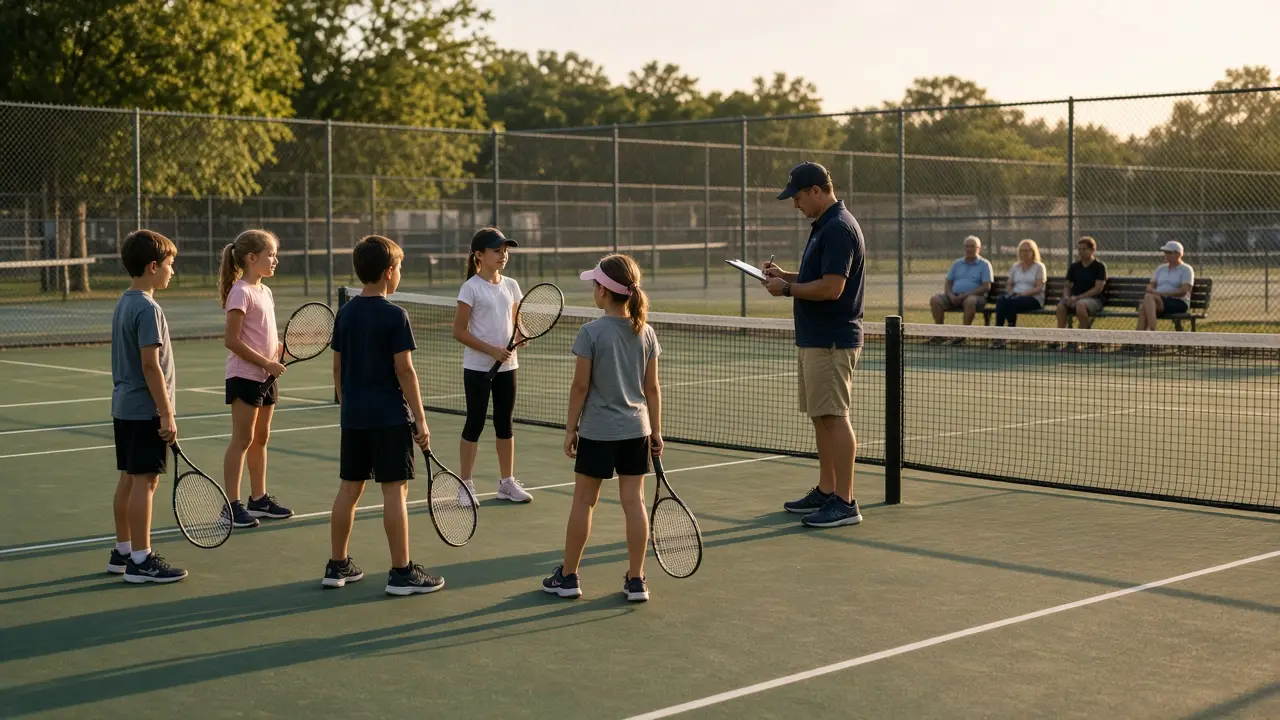
If you run a youth tennis league, late September is not the sectional. It is the week park permits lock, the 10-and-under group gets the court behind the restrooms, and a first-time parent is still walking toward last week’s net. The point is the easy part. The court is the product.
Volleyball loses a school night on a shared gym. Basketball loses the same night on a locked gym. Tennis loses the evening when court 4 is wet, the adult reservation took court 2, and a parent is standing at the far baseline of a court that is not theirs. The sport is different. The operations problem is the same: one official schedule, or three unofficial ones.
Tennis also hides the assignment inside a complex. A field has a number painted on a fence. A gym has a door. A tennis park can have eight courts, two gates, and a nickname only the regulars use. If the court, the gate, and the start time live in a coach’s camera roll, families will miss the first game before they ever learn the lines. That is why mid-season flag notes still apply on a hard court: change the official copy first, then tell people.
Why do youth tennis leagues break on the court number?
They break because a junior match does not own the building. It rents a court between a clinic, an adult ladder, and a walk-up player who thinks the empty court is open. When that court moves, the roster has to move with it.
An Atlanta tennis or Dallas tennis director can fill the 10s and 12s faster than they can hold a lighted court against a reservation system that does not know the league exists. Two players can share a warm-up. Two matches cannot share one court. If the official assignment is a text from last Tuesday, the first serve happens on the wrong baseline and the next group is already waiting at the net.
A court is also less forgiving than a wet diamond that can slide fifteen minutes. The park’s next booking starts when your hour ends. You cannot “play through” a puddle on the service box and you cannot borrow court 6 if an adult clinic paid for it. Parents need that court number in the same place as the roster.
- Put the facility name, court number, gate, and start time in one league dashboard.
- Treat a lost court like a rainout: change the official schedule first, then text.
- Tell parents which gate. First-time families do not know court 7 is the one past the restrooms.
How should directors publish a court parents can actually find?
Publish the signed park or club name, the court number, the gate, and the start time together — not as a nickname only the regulars use.
Most Los Angeles tennis and Chicago tennis cities have two parks with similar names. “The courts by the pool” is not an assignment. Say the park, the street, court 4, south gate, 5:30. If the complex has two lots, say which one. A parent who parks at the recreation-center entrance will miss the first game walking around the building.
Miami tennis and San Diego tennis programs often split a week across two sites. Tuesday is the park. Thursday is the club that lent two courts. If those addresses live in two threads, a late add will show up at the wrong net. Coaches Pick keeps the court beside the roster so a new player is not a ghost at the gate. Pricing stays free for league owners.
- Use the signed facility name and court number, not “coach’s court.”
- If two matches share an hour, say which court and which start.
- Link the map from the same place first-time parents already check for start time.
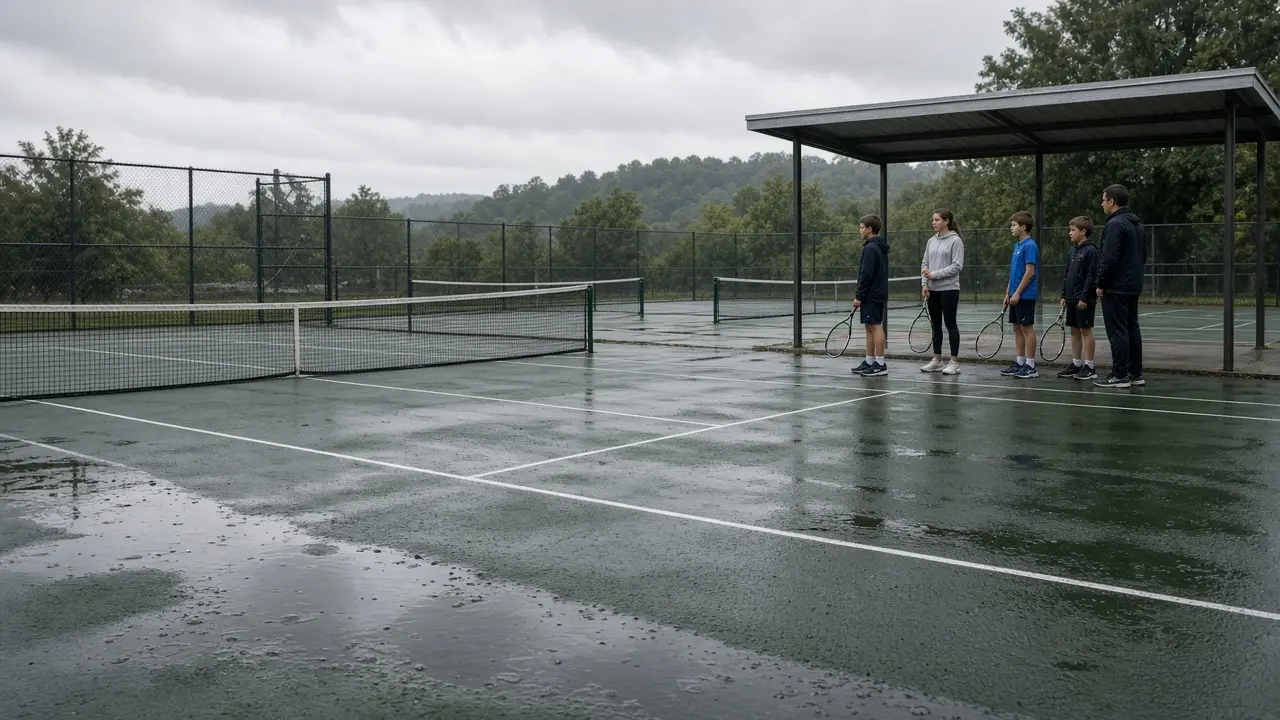
What happens when rain moves a match off the hard courts?
The family that already packed the racquets will drive to last night’s park unless the official schedule and the message move together. Everyone else inherits the argument at the fence.
A Houston tennis or Orlando tennis evening can die in twenty minutes: a storm cell, standing water on the baseline, lightning that clears the park. Boston tennis has the other version — the outdoor season is ending, and the only dry courts are inside a building with two courts and a different address. Either way, the new court has to land in the same channel as the original start time.
Do not announce “we moved indoors” without the replacement. Name the players or the flight, the new building, the court, the door, and the new start. If the courts are closed for the night, say that once, officially, and put the makeup in the master schedule before anyone asks for it. A 5:15 departure does not survive “check the app.”
How should a park program share courts it does not own?
Treat each booking as its own assignment, even if the same coach runs both nights. A family that learned Tuesday’s gate will still get lost on Thursday if the second address is only in a group chat.
Phoenix tennis and Dallas tennis households often have a rec player and a club player in the same week. Those courts are not interchangeable. Publish both in one youth sports league management view so a parent can see the week without opening three tools. If the club uses a different reservation app, the rec family still needs the park court in the same place as the park roster.
Give each site a short first-visit note: lot, gate, where bags go, whether lights come on automatically. First-time families in Charlotte tennis will not guess that the south gate is the only one unlocked before the pro shop opens.
Do clinics, ladders, and match play need the same schedule?
They need one official court and start time per group. They do not need the same lesson plan copied onto the match.
A clinic, a ladder, and a team match can share a facility and still fail if they share one vague “tennis night” note. Fall often mixes all three: a beginner group on courts 1 and 2, a 12-and-under match on court 4, an adult ladder that thinks court 4 is empty at 6. If those lists disagree, the volunteer with the clipboard is the one holding three start times.
Club families will hunt a reservation app. Park families will hunt a text thread. If those disagree, the park family leaves. Keep both on the same platform even if the format differs. An Austin tennis household with two kids should not need two logins to know who is on court 3 at 5:30.
Do boys and girls tennis flights need separate operations?
They can use different courts, different formats, and different age bands. They still need one official court per flight so a household with a daughter at 5:00 and a son at 6:15 does not need two tools.
Do not treat the girls flight as leftover courts after the boys matches. Give each flight its own start, its own court list, and its own parent note. The Atlanta tennis family that registered both kids will notice which flight gets the lighted court and the clearer message. A girls match is not a leftover hour. It is a court that still needs a gate and a start time.
What should a first-time tennis family know before the first match?
Send one first-match note. Cover arrival time, lot, gate, court, what kids bring, and where the live schedule lives. Do not bury it in a 12-email welcome series.
- Arrive 15 minutes before the listed start. Tennis needs time to find the court, change shoes, and walk from the far lot.
- Kids need a racquet, court shoes, water, and a hat if the park is uncovered. Follow the list your director sent, not a catalog from another city.
- Treat the published time as the first serve, not the arrival time.
- Parents stay off the court. Sideline coaching that talks through every point confuses kids who are still learning the lines.
- If the league posts a court map, open it before you leave the house.
A park court and a club court do not have the same rules about balls, guests, or where bags go. Tampa tennis park rules are not always the same as a club packet in Boston. The first-match note should say who to find at the gate if a kid is on the wrong court.
How should a tennis director message a court change?
Call the change in the same place as the original court. Say which matches moved, which facility and court they got, which gate to use, and what time play starts.
Vague “check the app” notes refill the inbox. Families will forgive a storm. They will not forgive finding out at the fence. Give coaches the same notice parents get. They are the ones holding the clipboard when the wrong pair walks onto the court.
- Name the flights and courts that moved, not “evening tennis.”
- If the park is closed, say that once, officially.
- Put the makeup in the master schedule before anyone asks for it.
- If the new site has a different gate or lot, say that in the same message.
Why do lights and gate codes belong next to the roster?
Because a 6:00 court is already tight. A family that finds the park and still cannot get onto the lighted courts will miss the first game. The gate code is not a secret for the coaching staff. It is part of the assignment.
Publish the light and gate note the same way you publish the court: next to the week’s matches, not in a photo from last season. If codes change weekly, the new code has to hit the same channel as the start time. Phoenix tennis and Los Angeles tennis parks often lock a side gate after dusk. A stale code is a missed start.
What should a tennis director check before the next match night?
You need the basics to hold while the roster is still moving. Rec tennis adds kids after week one. A ladder drops a player and adds another. The schedule has to survive that.
- Every parent can find tonight’s facility, court, gate, and start time without asking a coach.
- Every coach can see an accurate roster, including late adds.
- A rain call, a lost permit, or a court flip hits the same source everyone already uses.
- Clinics, ladders, and matches each have their own court and their own parent note.
- New families get a short first-match note: arrival time, lot, gate, what kids bring.
- You have one place to message a flight instead of rebuilding a text thread.
If those things are true, a fall tennis season can absorb a storm, a late registration, and a coach who has to work Thursday. If they are not, the league spends its goodwill on gate logistics. Brands that want to show up at that park can sponsor a game. Directors can request a demo. Coaches Pick stays free for league owners.
Frequently asked questions
What is the hardest part of running a youth tennis league?
The court. Junior matches are short. A wrong court number, a wet hard court, or a park permit that moved creates more parent questions than the score. The official facility, court, and start time have to live in one place.
How should youth tennis leagues announce a court change?
Update the master schedule first, then message every affected player with the new facility name, court number, gate, and start time. Coaches and parents should see the same change at the same time. “We moved” is not an assignment.
What should parents do when it rains before a junior match?
Check the same place that listed the original court. A director should say whether the match is delayed, moved indoors, or canceled, and name the backup court if there is one. Do not send families to a wet park to find out.
Is Coaches Pick free for youth tennis league owners?
Yes. Coaches Pick is free for league owners, including rec, park, and junior tennis programs. Parents, coaches, and players get the court, the start time, and the roster in one place.
Need free youth league management software?
Coaches Pick is free for league owners. Registration, schedules, messaging, and portals for parents, coaches, referees, and kids — built for NFL FLAG and other youth sports programs that are adding teams.