League Operations
How Should Youth Leagues Track Shared Equipment?
Track shared youth sports equipment with one kit record, a named adult custodian, a confirmed handoff, and a return check. Record what actually changes hands rather than assuming a bag is complete. Keep equipment availability separate from the practice schedule so coaches can resolve shortages before families arrive.
· Coaches Pick · 6 min read
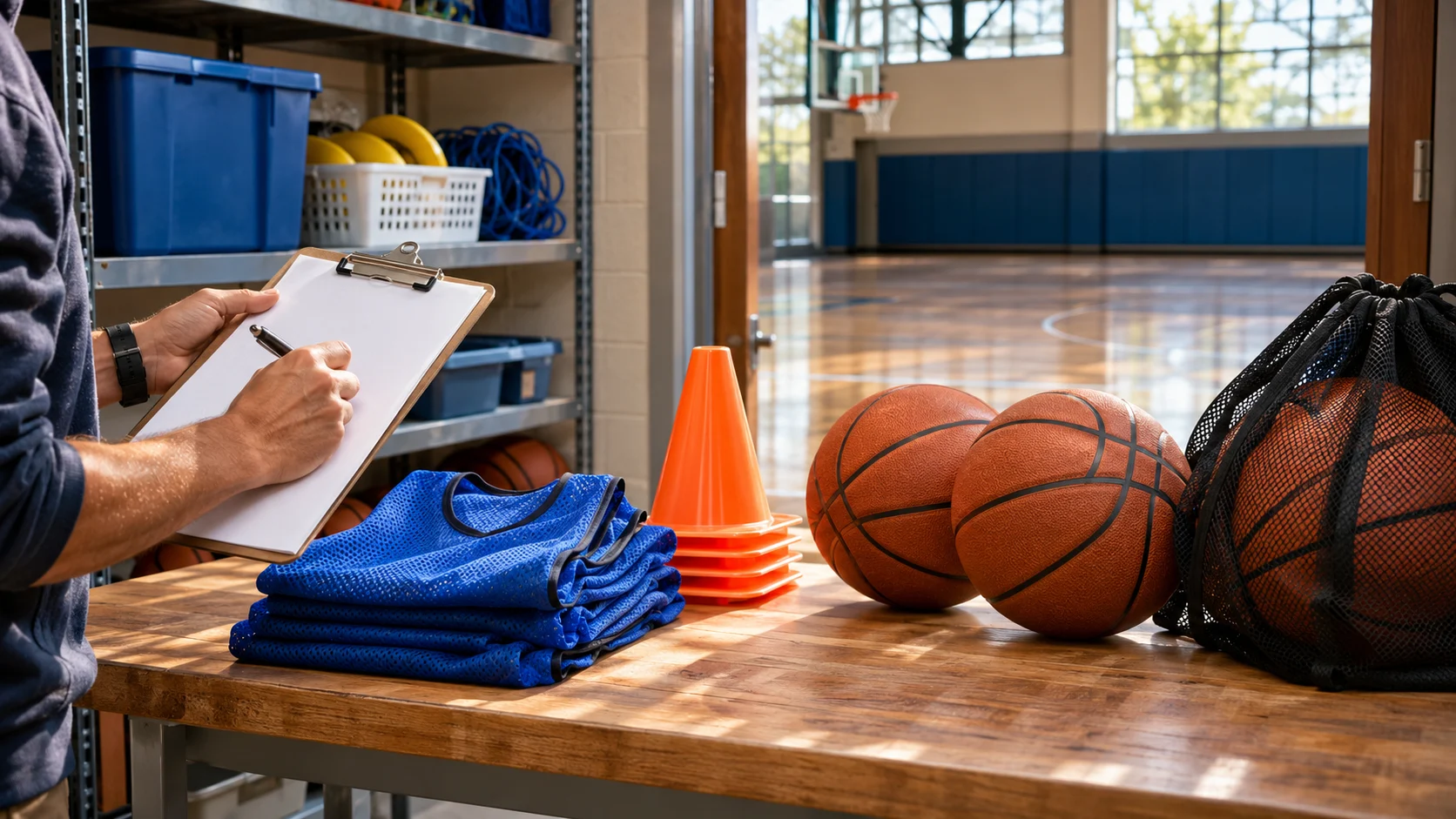
Track shared youth sports equipment with one kit record, a named adult custodian, a confirmed handoff, and a return check. Record what actually changes hands rather than assuming a bag is complete. Keep equipment availability separate from the practice schedule so coaches can resolve shortages before families arrive.
What should an equipment checkout record include?
An equipment checkout record should identify the kit, its contents, the adult receiving it, the handoff date, and the expected return arrangement. Add a condition note and an exception field. A named owner for the next action is more useful than a general reminder to bring everything back.
Start with equipment the league actually shares: balls, cones, practice bibs, pumps, or other approved supplies. Record sizes where they matter. Keep personal player information out of the inventory sheet; a team name and an authorized adult custodian are usually sufficient for this operational workflow.
| Field | What to record |
|---|---|
| Kit identifier | A stable label for the bag or storage bin |
| Contents | Item type, size where relevant, and counted quantity |
| Custodian | The authorized adult currently responsible for the kit |
| Handoff | Actual date and confirmation from both adults |
| Condition | Observed concerns and items held out of use |
| Return plan | Date, place, receiving adult, and unresolved exceptions |
How should coaches complete a reliable handoff?
Count the kit together at the handoff and compare it with the current record before either adult leaves. Confirm any missing or substituted item in writing. Update the custodian immediately, especially when equipment moves directly between teams instead of returning to the league’s normal storage location.
Do not treat a group-chat message as the inventory itself. Link to the current record, then use the chat to draw attention to a transfer or an unresolved question. If a substitute coach collects the kit, confirm who has authority to accept it and who will return it.
Example handoff message: “Kit [identifier] transferred from [adult] to [adult] at [date and time]. Contents counted: [items and quantities]. Exceptions: [details or none]. Return: [place, time, receiving adult].” This is a blank planning template, not a report of an actual league transaction.
How can shared kits fit a busy gym schedule?
Assign equipment availability alongside venue time, but keep the two records distinct. A reserved court does not prove the required kit is ready. Check where the equipment will be before the session, how it will reach the next coach, and who has permission to access the storage area.
Use a short pre-session review: venue confirmed, kit custodian confirmed, pickup arranged, and any shortage resolved. If consecutive sessions share a kit, allow an explicit handoff instead of assuming the second coach can find it after the first group leaves.
Coordinate this process with the youth basketball gym-time guide and the shared volleyball gym guide. Those scheduling decisions should inform equipment pickup and return windows, not become a separate set of contradictory instructions.
What happens when equipment is missing or damaged?
Record a missing item as an unresolved exception and assign one adult to investigate it. Set damaged or questionable equipment aside rather than quietly returning it to the available kit. Follow the relevant manufacturer instructions and league procedures before deciding whether an item can return to use.
Check the U.S. Consumer Product Safety Commission recall and product safety warning database when reviewing equipment, using the actual product and model information. Read any matching notice for its specific instructions. A completed inventory check does not certify that a product is safe.
The CPSC source was checked on November 17, 2026. This article offers an administrative workflow, not equipment inspection certification or sport-specific safety rules. Protective equipment, fixed installations, and specialist gear need the applicable manufacturer and governing-body procedures; do not substitute this checklist for those requirements.
How should leagues organize the return window?
Give coaches a specific return place, a receiving adult, and a clear way to report an exception before the deadline. Count items when they arrive instead of marking a bag returned on sight. Keep the record open until shortages and condition concerns have an assigned next step.
Offer a documented alternative when the planned return time does not work. Explain which entrance and storage area to use without publishing access codes in a public post. Keep pickup and return routes clear, and ask the venue about accessible arrangements when planning the handoff.
For a separate review of facility access, ADA Support is part of our related resource network. That review is distinct from equipment tracking; do not imply an inventory checklist establishes accessibility compliance.
How do you prepare the inventory for next season?
Close the season by comparing returned kits with the records, resolving exceptions, and identifying what is actually available for reuse. Separate quantities from condition decisions. Give the incoming coordinator a current inventory and an explanation of open issues rather than forwarding an unfiltered collection of old messages.
Record whether each kit is ready, awaiting review, missing items, or unavailable. Use wording your volunteers understand and define who may change each status. Follow manufacturer storage instructions, and keep supplies organized so the next count is straightforward.
Before the next registration cycle, review the process with coaches: which fields were useful, which handoffs failed, and which return arrangements were hard to follow. Simplify the workflow where possible. The goal is a dependable record of custody and availability, not more paperwork for its own sake.
What else should league directors know?
Keep the equipment process proportionate to the supplies your league shares. The questions below clarify tracking detail, transfer responsibility, and the final season record. Use the same definitions across teams so an incoming volunteer can understand what is available, what is missing, and what still needs review.
Does every ball need its own inventory number?
Not necessarily. For routine shared supplies, a kit identifier with item types, sizes, and quantities may be easier to maintain. Use individual identifiers when an item needs separate tracking. Choose a level of detail volunteers can keep accurate, rather than creating a complicated record nobody updates.
Who should confirm an equipment transfer between teams?
The adults handing over and receiving the kit should confirm the contents and condition, with the equipment coordinator resolving discrepancies. A message saying that a bag was left somewhere is not a completed transfer. Record the receiving custodian and the time so the next coach knows where to look.
What belongs in the final season equipment record?
Keep the returned quantities, unresolved shortages, condition notes, storage location, and the person responsible for the next action. Separate items awaiting review from supplies available for reuse. Follow the league’s retention policy for records and remove unnecessary personal details when they no longer serve an operational purpose.
Need free youth league management software?
Coaches Pick provides league management tools for registration, schedules, and communication. Explore how those tools fit your program while keeping a separate equipment record that volunteers can maintain consistently. Clear responsibilities matter more than a particular format, and a platform should support your process rather than obscure who owns the next action.